
Leaning or Loose Sections
A leaning run can result from a failed post, disturbed footing, weak rails, wind damage, or movement at the grade. We identify the failed component before straightening the fence.
Serving Sioux Falls, South Dakota & surrounding areas
Open 24/7
Fence Repair in Sioux Falls
Practical repairs for damaged wood, vinyl, and metal residential fences, with careful attention to posts, gates, alignment, and long-term stability.
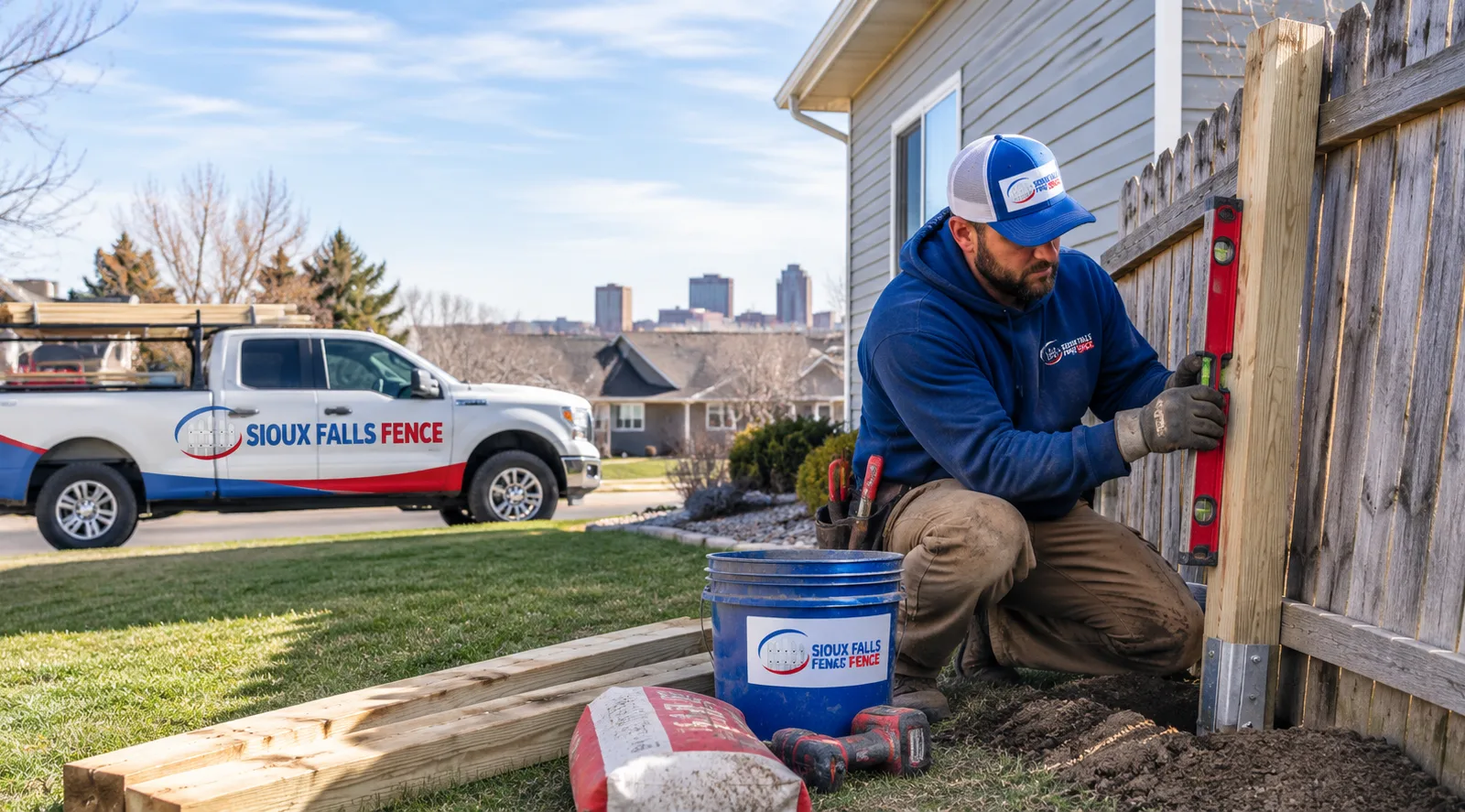
Repair planning starts with the post, frame, connections, and surrounding fence line.
Structure
Posts, Rails & Panels
Materials
Wood, Vinyl & Metal
Function
Alignment, Gates & Hardware
Repair Assessment
When a fence leans, a gate drags, or panels pull loose, the visible problem may be only part of the failure. Fence repair in Sioux Falls should begin with an inspection of the posts, rails, panels, fasteners, gate hardware, and grade around the damaged area. That makes it possible to repair the cause rather than attach new material to a weak structure.
Sioux Falls weather puts fences through freeze and thaw cycles, strong winds, snow loads, and summer moisture. A post that shifts slightly can throw a gate out of square. Repeated movement may loosen brackets or split rails. Wood can decay where it meets damp soil, while vinyl becomes vulnerable when a post or rail no longer supports the panel correctly.
Sioux Falls Fence handles repairs with a clear scope based on material condition and structural stability. As Sioux Falls' trusted fence company team, we explain which components can remain, which should be replaced, and whether a targeted repair is likely to hold up. The goal is a straight, secure fence that works as intended without replacing sound sections unnecessarily.
Material-Specific Work
Each fence material fails differently, so the repair method needs to match the system.
Wood fence repair: Common work includes replacing rotted or split pickets, reinforcing or replacing rails, resetting posts, correcting leaning sections, and repairing wood gates. Matching the existing board width, profile, spacing, and orientation helps the repaired area blend with the rest of the fence. When damage reaches several connected components, the post and rails should be assessed before new pickets are installed.
Vinyl fence repair: Cracked panels, broken rails, loose post caps, and shifted posts require compatible replacement parts. Vinyl components are manufactured as fitted systems, and profiles can differ between brands. Measurements of the rail ends, panel dimensions, and post openings help determine whether matching parts are available. A broken panel should not be forced into an out-of-square opening.
Metal fence repair: Residential metal fence work may involve bent sections, loose brackets, damaged gate hardware, corrosion, or an unstable post. The correct approach depends on whether the fence is chain link, ornamental steel, or aluminum. Chain-link repairs can include fabric, tension bars, rails, ties, and fittings. Ornamental systems often require profile-specific panels and brackets.
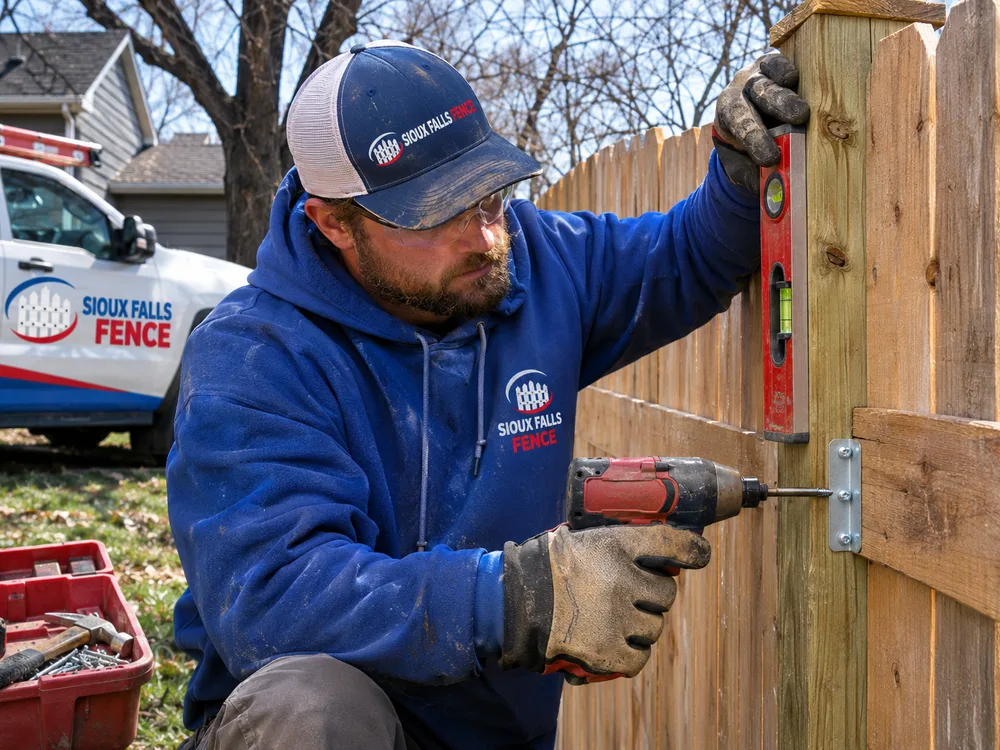
Common Repair Conditions
A leaning run can result from a failed post, disturbed footing, weak rails, wind damage, or movement at the grade. We identify the failed component before straightening the fence.
Individual wood boards, vinyl panels, and compatible metal sections may be replaced when the surrounding frame and posts remain serviceable.
Dragging, sagging, or hard-to-latch gates may need hinge adjustment, new hardware, frame correction, or work on the supporting posts.
Wind, falling limbs, snow pressure, and accidental impacts can damage several connected parts. The inspection follows the load path through panels, rails, brackets, and posts.
Missing fasteners, pulled brackets, damaged ties, and worn latches can make an otherwise sound fence unstable or difficult to use.
Damaged material is removed where practical, but replacement is recommended when deterioration has weakened a structural component.
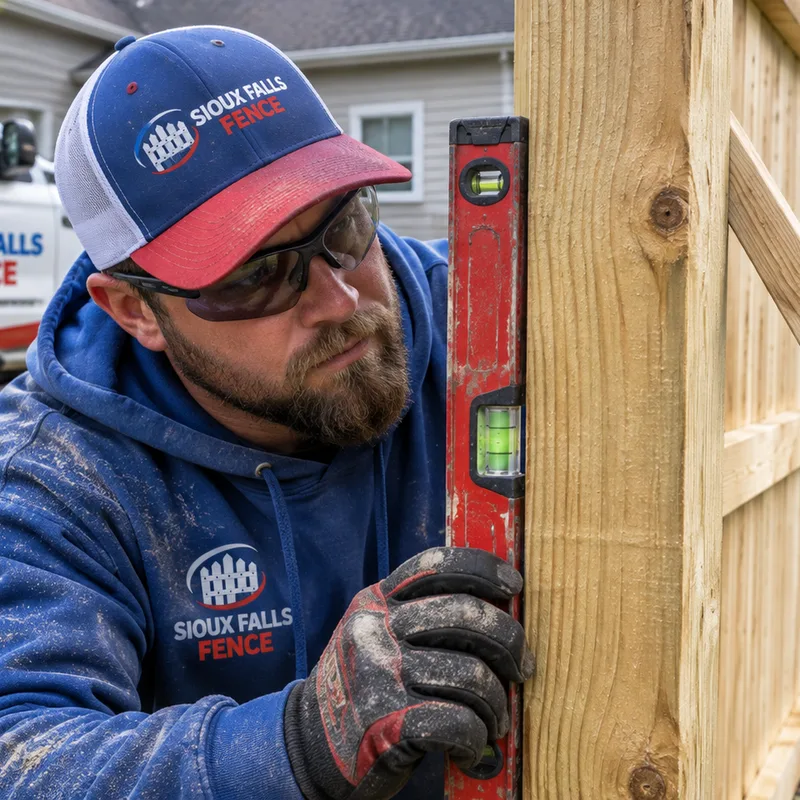
Structural Support
Posts carry the fence load and resist movement, so post condition determines whether many repairs will last. Warning signs include a post that rocks at ground level, a fence line that returns to a lean after being pushed upright, cracked concrete around the base, advanced wood decay, or gate posts that move when the gate swings.
A loose post may need to be reset, while a rotted, bent, or badly damaged post generally requires replacement. The surrounding fence is supported, attached rails or panels are disconnected, and the failed post and old footing are removed as conditions allow. The replacement is positioned for the correct line, height, and plumb before the fence is reattached.
Private utility locating should be considered when lines owned by the property holder may be near the work area. Public utility markings do not necessarily identify private lines such as irrigation, low-voltage lighting, or privately installed electrical service. Access, buried obstructions, and nearby landscaping can also affect the repair plan.
Assessment to Completion
A measured repair process ties the visible damage to the structure, compatible materials, and final operation.
We review the reported damage and check nearby posts, rails, panels, fasteners, and gates. This helps separate isolated damage from a structural problem that extends beyond one component.
You receive a practical recommendation based on material compatibility, access, and the condition of the existing fence. When matching parts may be difficult to source, that issue is addressed before work begins.
Damaged components are removed as needed, posts or framing are corrected, and suitable replacement materials are installed. Adjacent sections are supported during work when necessary.
The repaired run is checked for line and stability. Gates are operated, latches are tested, and repaired connections are reviewed before the work is considered complete.
We explain what was repaired and point out any remaining wear that may need attention later. You can assess the result with a clear understanding of the completed scope.
Repair Pricing
Residential fence repairs in Sioux Falls typically cost about $250 to $1,500, while extensive post, gate, or multi-panel work may cost $1,500 to $4,000 or more. A small hardware or picket repair is usually at the lower end; replacing posts and rebuilding connected sections costs more.
Final price depends on fence material, damage extent, post footings, matching-part availability, access, disposal, and whether gates require realignment. Vinyl and ornamental components may cost more when profile-specific parts are needed. Exact cost is confirmed after the fence is inspected and the repair scope is established.
Repair or Replace
Repair is usually practical when the damage is confined to a few posts, rails, pickets, panels, fittings, or gate components and the surrounding fence remains structurally sound. A localized repair can restore stability and function while preserving usable material.
Replacement may be the better choice when decay, corrosion, cracking, or movement affects a large share of the fence. Repeated failures along the same run can indicate that the posts or frame have reached the end of their useful condition. Parts availability also matters. Some older vinyl and ornamental metal profiles cannot be matched closely enough for a dependable component-level repair.
A reliable fence repair company in Sioux Falls should explain both options when the answer is not obvious. Ask which parts are failing, whether replacement materials are compatible, how the repaired area will connect to the original fence, and what conditions could limit the repair. A written scope should identify the materials and components included rather than relying on a vague promise to fix the fence.
Have the damage assessed before a leaning post or loose panel places more strain on the rest of the fence. A clear scope lets you compare repair options based on structure, material compatibility, and expected service life.
Call for a Free EstimatePractical Repair Answers
Yes, a leaning fence can often be repaired when the movement is limited to a few failed posts or connections. The surrounding rails and panels must still be sound. Sioux Falls freeze and thaw cycles can contribute to movement at the footing, so the post base and grade should be checked before the fence is straightened.
Many localized repairs can be completed in one working day, while several post replacements or a longer damaged run may require additional time. Material availability, concrete or footing removal, access, and weather affect scheduling. Some post work also needs adequate setting time before full loads or gate movement are restored.
A close match is often possible, but an exact match depends on the material and whether the original profile is still manufactured. Wood dimensions and picket styles can usually be measured directly. Vinyl fence repair in Sioux Falls may require identifying proprietary rails, panels, or post openings before compatible parts can be ordered.
A post should usually be replaced when it is rotted through, bent, cracked, or no longer secure at the footing. Reinforcement may be suitable in limited situations when the post material remains sound and the repair method can resist the expected load. Gate posts require special attention because they carry moving weight.
Yes, gate repairs can be included when the gate, hardware, or supporting posts are serviceable. Common work includes correcting sag, adjusting hinges, replacing latches, and bringing posts back into alignment. A gate will continue to bind if its support post moves, so hardware adjustment alone may not solve the problem.
Metal fencing can often be repaired when the damage is localized and compatible components are available. Chain-link fabric, rails, ties, tension bars, and fittings may be replaced individually. Ornamental steel or aluminum work depends on the panel profile, coating, connection type, and whether corrosion has reduced the strength of the remaining metal.
Access to the full damaged area is the main requirement, but being present is helpful when gate operation, property use, pets, or private buried lines need discussion. The property at 2228 W 5th St, Unit 4 is Sioux Falls Fence's local address; repair work is assessed at the customer's fence so measurements and site conditions can be documented.
Plan the Repair
Tell Sioux Falls Fence what is damaged and where the problem started. We will assess the structure, discuss suitable materials, and define the work needed to restore a secure, usable fence.