
A Layout That Fits the Lot
The proposed line should account for property boundaries, gates, grade changes, drainage paths, and access around the house. Corners and transitions are planned before holes are dug.
Serving Sioux Falls, South Dakota & surrounding areas
Open 24/7
Custom Wood Fencing in Tea
Get a wood fence planned for your property, privacy needs, and preferred style, with materials and construction details suited to eastern South Dakota weather.
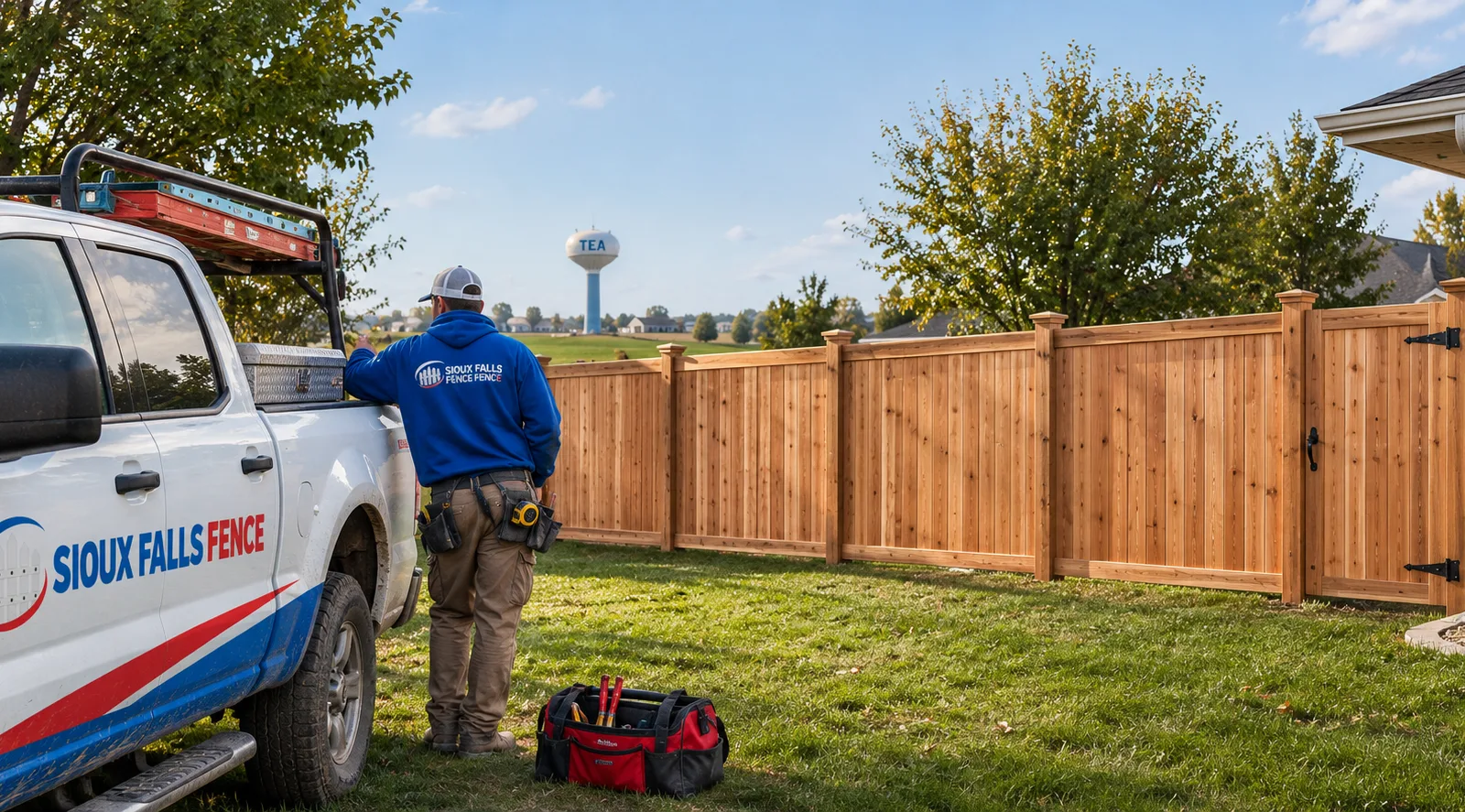
Custom planning aligns the fence line, privacy pattern, posts, and gate with the property.
Layout
Boundaries, Grade & Access
Design
Privacy, Picket & Horizontal
Function
Gates, Screening & Containment
Property-Focused Planning
Custom Wood Fence Tea installation starts with practical decisions: where the fence should run, how much privacy you want, which gates you need, and what design suits the house. Sioux Falls Fence plans those details before installation so the finished fence follows the intended layout and works for daily use.
Wood is a flexible choice for backyards, side yards, corner lots, pet enclosures, and screening around patios or equipment. Board-on-board construction adds privacy, while spaced pickets preserve a more open appearance. Horizontal boards create a contemporary profile but require careful framing to limit sagging. The right design depends on exposure, grade changes, sightlines, and how both sides of the fence will look.
For every project, a professional fence company in Sioux Falls provides a clear scope covering the layout, material, height, post construction, gates, and included removal work. Our base at 2228 W 5th St, Unit 4 keeps the team positioned for work in Sioux Falls and nearby Tea.
Material and Design Options
Cedar is commonly selected for custom residential fencing because it has natural decay resistance and accepts stain well. Pressure-treated lumber can also be used where budget and ground-contact performance guide the material choice. Material grade matters. Straight boards, sound rails, and suitable posts help a fence retain a clean appearance as the wood dries and seasons.
A full-privacy fence uses closely fitted vertical or horizontal boards. Board-on-board fencing overlaps alternating boards to reduce direct sightlines as lumber naturally expands and contracts. Shadowbox construction alternates boards across the rails, allowing more airflow while providing partial screening. Traditional picket fencing works where boundary definition matters more than complete privacy.
Trim boards, cap rails, decorative post tops, lattice accents, and coordinated gates can make the fence look intentional rather than generic. We help balance those details against maintenance, wind exposure, and the architecture of the property. A good design should still be practical to repair one board or adjust a gate years later.
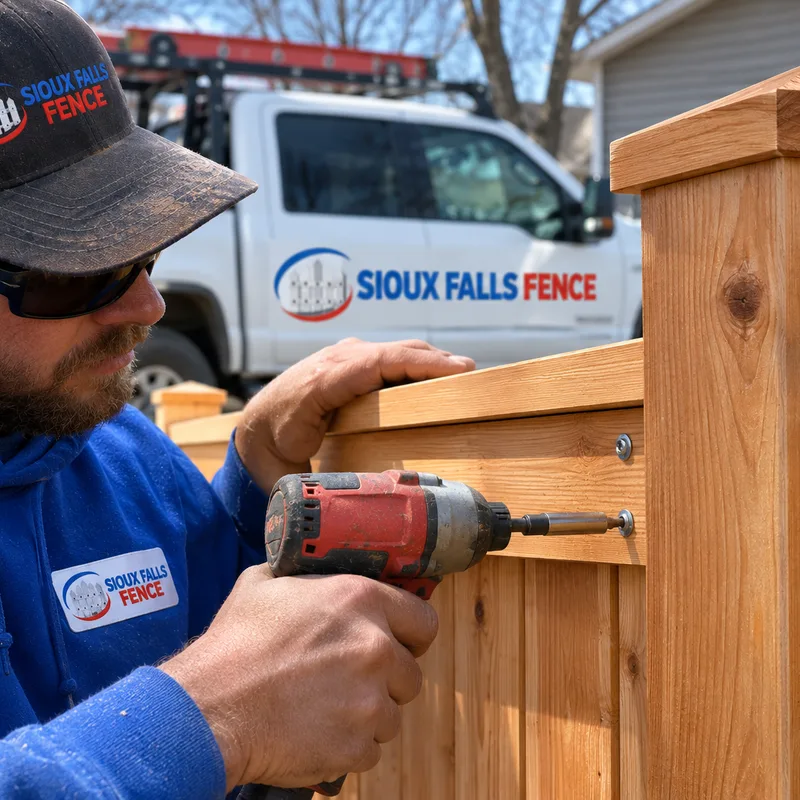
Wood Fence Specifications
The proposed line should account for property boundaries, gates, grade changes, drainage paths, and access around the house. Corners and transitions are planned before holes are dug.
Eastern South Dakota has freezing winters and seasonal ground movement. Post depth, footing construction, drainage, and spacing must be selected with frost exposure and fence height in mind.
A solid privacy fence catches more wind than an open picket design. Post size, post spacing, rails, fasteners, and panel width should form one suitable structural system.
Gate width, diagonal bracing, hinge placement, latch height, and clearance affect long-term operation. Wide openings may need a double-gate configuration or heavier framing.
Exterior-rated, corrosion-resistant fasteners reduce staining and premature hardware failure. Compatible screws, nails, hinges, and latches are selected for the wood species and exposure.
Wood needs time to reach a suitable moisture level before some finishes are applied. Stain or sealer can reduce moisture absorption and slow weathering when maintained as directed.
Assessment to Installation
A measured process connects the intended layout and design with utility checks, post construction, gates, and final operation.
We identify the areas to enclose, the desired privacy level, preferred appearance, gate locations, and any removal work. Photos and basic measurements help establish the initial scope.
The layout is checked against visible property conditions, slopes, structures, access, and obstructions. Owners should confirm boundary information and any applicable easements, covenants, or association rules before construction.
Public underground utilities should be located through South Dakota 811 before excavation. Private lines such as irrigation, low-voltage lighting, or privately installed utilities may require separate locating. Permit and setback requirements are confirmed with the authority that governs the property.
Posts are aligned and set, then rails, boards, trim, and gates are installed according to the approved design. Grade transitions are handled with stepping or racking where the chosen style permits.
We review gate operation, latches, fence lines, cleanup, and care guidance with the owner. Any finish schedule should follow the lumber and coating manufacturer's instructions.
Material Planning
Wood is often the better fit when privacy, natural color, and design flexibility lead the decision. Individual boards can follow modest grade changes, and trim details can be tailored to the house. It does require periodic inspection and maintenance. Boards may check, cup, or fade as they weather, and stain or sealer needs renewal based on exposure and product instructions.
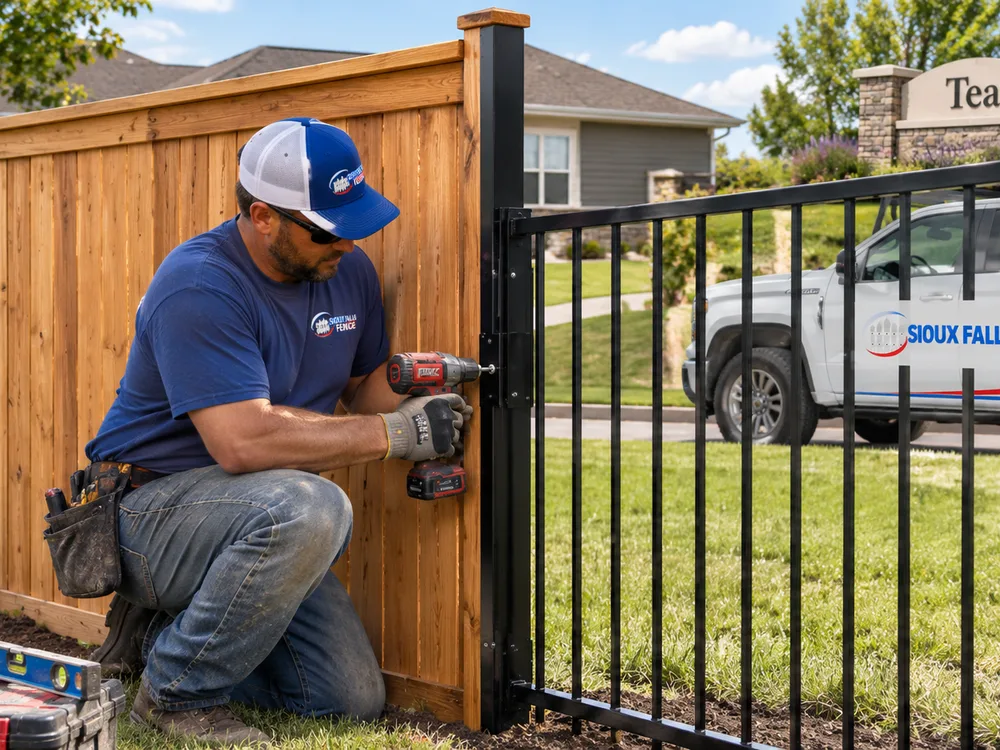
Metal Fence Installation Tea may be a stronger choice when open sightlines, low routine maintenance, or a narrow profile matters more than solid screening. Ornamental metal works well around front yards, pools, and areas where visibility is useful, subject to applicable barrier rules. Chain-link is another practical metal option for containment and boundary control.
Some properties benefit from combining materials. A wood privacy run can screen a patio, while an ornamental metal segment preserves a view or improves visibility near a driveway. Transitions need compatible posts and deliberate termination points. Sioux Falls Fence can compare the options during planning without forcing one material into every part of the lot.
Project Pricing
Custom wood fencing in the Tea and Sioux Falls area typically costs about $30 to $65 per linear foot installed, while detailed designs, difficult access, premium lumber, or multiple gates may cost more. A typical 150-linear-foot project may range from about $4,500 to $9,750.
Final price changes with fence height, wood species, board pattern, post size, grade, demolition, disposal, gate hardware, utility conflicts, and staining. Corner count and stepped construction also add labor. The exact cost is confirmed after the layout, site conditions, and written scope are reviewed.
Bring us your preferred style, approximate fence length, and gate needs. We will turn them into a practical scope with material choices and a clear installation plan.
Call for a Free EstimatePlanning Answers
Many residential wood fence installations take several working days after materials, layout, and utility markings are ready. Length, gate count, demolition, access, grade changes, and weather affect the schedule. Concrete curing requirements and wet or frozen ground can also change when framing begins.
Permit, height, setback, and corner-visibility rules depend on the property's governing jurisdiction and the proposed fence. Tea properties should be checked against current City of Tea requirements before work begins. Owners should also review recorded easements and any homeowners association standards because approval from one authority does not replace another.
Public underground utility locating should be arranged through South Dakota 811 before excavation. The property owner must also identify private facilities that public locators may not mark, including irrigation lines, invisible pet fencing, private electrical runs, and low-voltage lighting. Marks should remain visible until post excavation is complete.
Cedar is usually favored for appearance, dimensional stability, and natural decay resistance, while pressure-treated lumber can offer a lower initial material cost and strong ground-contact options. The better choice depends on grade, budget, finish expectations, and which components are being built. Posts, rails, and boards do not always need to use the same material.
A new fence should be stained when the lumber is dry enough for the selected coating, following the stain and lumber manufacturers' directions. Pressure-treated boards may need more drying time than kiln-dried cedar. Sioux Falls area temperature swings, rain, shade, and humidity affect drying, so a fixed calendar date is less reliable than checking the wood's condition.
Yes, a wood fence can usually follow a slope through stepped panels or boards that track the grade. The right method depends on the fence style and the amount of elevation change. Stepping creates level panel tops with changes at posts, while grade-following construction can reduce gaps near the ground.
Metal fencing is often better when visibility, lower routine maintenance, or a slim profile is more important than full privacy. Ornamental metal can suit front yards and pool enclosures, while chain-link is practical for containment. Pool barriers must satisfy current rules for height, openings, gate direction, latching, and access control.
An old fence can often be replaced near its existing line, but the original location should not be treated as proof of the legal boundary. The planned line must be reviewed for current setbacks, easements, utility conflicts, and survey information. Removal, disposal, and extraction of old footings should be included explicitly in the written scope.
Plan Your Fence
Tell Sioux Falls Fence what you want to enclose, the level of privacy you need, and the style you prefer. We will help define the layout, materials, gates, and site work before installation starts.